 Males
Males
 |
| Ashton Kutcher in The Butterfly Effect |
In Horror and Thriller films the male is often seen as the main protagonist. They are often physically and mentally superior. They usually save the women in the narrative and are brave. Men often take a more active role than women in Horror and Thriller films. An example of representation of males in a Thriller is in the
Dark Knight Rises. The movie mainly features outcast males who believe that only
 |
| Christian Bale in Dark Knight Rise |
violence can be used to express themselves. The villains are defeated by the hero's who can use more violence than them, by other males who are physically stronger. The film also has considerably more men in it than women, the main villain Bane's crew is all men. However, two of main women in the film Tate and Kyle (Anne Hathaway and Marion Cotillard) are represented as strong and independent women which goes against the general representation of women in horror and thriller films.
Women
 |
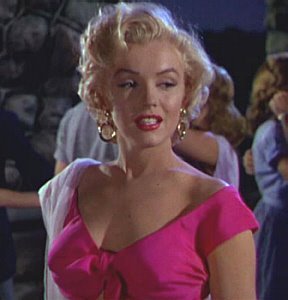
| Marilyn Monroe in Niagara |
 |
| Jamie Lee Curtis as Laurie Strode |

Traditionally in Horror and Thriller films the women are seen as much weaker and have a more passive role. They are often seen as the "damsel in distress" and are killed for committing some sinful act. Generally the girls used are attractive and blonde. On the whole women are usually represented as helpless and innocent. In horror especially their is often a final girl who is presented as virginal and often quite masculine in the way the dress or in the fact that they have unisex names. They contrast greatly with the seductive and weak girls who are often murdered. An example of female representation is in
Halloween (1978). Lynda and Annie are showed to be sexually attractive as we see them undressing but also domestic. The more minor female characters are objectified as opposed to the final girl Laurie, she is masculine and has an unisex name. The movie is progressive as we the audience can relate to Laurie.
 Males
Males


 Traditionally in Horror and Thriller films the women are seen as much weaker and have a more passive role. They are often seen as the "damsel in distress" and are killed for committing some sinful act. Generally the girls used are attractive and blonde. On the whole women are usually represented as helpless and innocent. In horror especially their is often a final girl who is presented as virginal and often quite masculine in the way the dress or in the fact that they have unisex names. They contrast greatly with the seductive and weak girls who are often murdered. An example of female representation is in Halloween (1978). Lynda and Annie are showed to be sexually attractive as we see them undressing but also domestic. The more minor female characters are objectified as opposed to the final girl Laurie, she is masculine and has an unisex name. The movie is progressive as we the audience can relate to Laurie.


