Showing posts with label Theory. Show all posts

Sunday, 24 February 2013

Appliying theory

Genre
I looked at both thriller and horror and will use some of the codes and conventions in my own opening sequence.
It is most likely that our film will be psychological horror. In our sequence I would like to use

  • A female against a male character. 
  • Possibly drug taking. 
  • A masked killer or killer who is an outcast. 
  • High key lighting for shadows. 
  • Flashbacks
Narrative

Our sequence is only 2 minutes long so there cant be and that means that we can only have a few stages of Todorov (Equilibrium and Disruption possibly). It will also be important for us to get in the main protagonist and villain obvious in the first clip.  I would like there to be some binary opposites established also.
 
Audience
I explain Audience and apply it in a two separate posts you can view both posts here.

Sunday, 3 February 2013

Narrative

Narrative is the way in which a story is told in both fictional and non fictional media texts.
There are many theories when it comes to narrative including those by Propp, Todorov, Barthes and Levi-Strauss.

PROPP
Propp studied fairy-tales in the 1920's. His theory said that it was possible to put characters and their actions into clearly defined rules.
The character roles he found were:

  1. The hero: Individual(s) who seek to restore the equalibrium 
  2. The villian: Individual(s) oppose the hero and disrupt the equilibrium
  3. The donor: Individual(s) who give the hero something, advice, an object, magic, etc. 
  4. The helper: Individual(s) who help the hero.
  5. The dispatcher: Individual(s) who sends the hero on the way for their quest via a message etc.
  6. The false hero: Individual(s) who disrupt the hero's quest by pretending to help them. 
  7. Prince/Princess: Individual(s) who need saving/helping by the hero and is the object of the villain's plotting
  8. The Father: Who acts to reward the hero for his efforts.
TODOROV


Tzvetan Todorov is a Franco-Bulgarian philosopher. He lives in France with his wife and their two children. He is a visiting professor and spends his time writing books and essays about literary theory, thought history and culture theory.
He stated that there was a pattern in all narrative, it was as follows:

BARTHES
Roland Gérard Barthes was a french literary theorist, philosopher, linguist, critic and a semiotician.
He suggested that narrative works with five different codes which mean the audience can make sense of it, they are:
Action-a narrative device where a resolution is produced by an action, e.g. a fight.

Enigma-a narrative device that creates unsolved answers in the audiences mind by presenting a problem to be solved. This delays the stories ending.
Symbolic- otherwise known as connotation which is deeper meanings within something and meaning that is associated with something
Semic-otherwise known as denotation which is the literal meaning.
Cultural- a narrative device which the audience can recognize as being part of a culture.

LEVI-STRAUSS
Claude Levi Strauss was a french anthropologist in the 1900 who looked at narrative structure  in terms of Binary Opposite. Binary opposites reveal the structure of media texts and Strauss believed that our understanding of a word relies on our perception of the words opposite meaning as well as its face value. He identified the fact that each genre has themes in binary opposites, e.g in Horror and Thiller films there is good vs bad, insane vs sane, hero vs villain, normal vs strange etc.

Shrek
 These narrative theories can be applied to the film Shrek.
Todorov: 
Equllibruim- Shrek is living in his swamp happily
Disruption - The creatures have to move because of Lord Farquaad and chose Shreks swamp as their new home.
Recongintion: Shrek doesn't like the fact that they are trespassing on his land.
Repair: In order to fix the animals being on his land he has to agree to go with donkey to help save Princess Fiona.
New Equllibruim: He and princess Fiona escape and fall in love. She is also happy because she now feels she fits in as her curse form.
Propp: 
Some of Propps theories can also be applied to Shrek.
Villain=Lord Farquuad
Hero=Shrek
Helper= Donkey
Princess= Princess Fiona
The Dispatcher=all the creatures
 

Applying Narrative Theories to a film

Todorov- Todorov's theory of equillbruim can be applied to the film Juno. The equilibrium is that Juno is a normal teenager who doesn't know she is pregnant yet. The disruption is when she finds out that she is. The attempt to repair the damage is when she decides to give the baby up for adoption. The equilibrium is restored when she does.


Saturday, 19 January 2013

Representation in Horror and Thriller

Males
Ashton Kutcher in The Butterfly Effect
In Horror and Thriller films the male is often seen as the main protagonist. They are often physically and mentally superior. They usually save the women in the narrative and are brave. Men often take a more active role than women in Horror and Thriller films. An example of representation of males in a Thriller is in the Dark Knight Rises. The movie mainly features outcast males who believe that only
Christian Bale in Dark Knight Rise
violence can be used to express themselves. The villains are defeated by the hero's who can use more violence than them, by other males who are physically stronger. The film also has considerably more men in it than women, the main villain Bane's crew is all men. However, two of main women in the film Tate and Kyle (Anne Hathaway and Marion Cotillard) are represented as strong and independent women which goes against the general representation of women in horror and thriller films.


Women

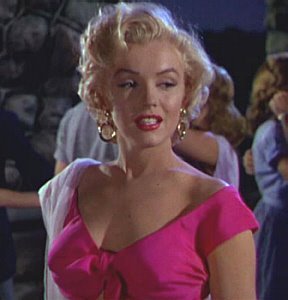
Marilyn Monroe in Niagara
Jamie Lee Curtis as Laurie Strode
Traditionally in Horror and Thriller films the women are seen as much weaker and have a more passive role. They are often seen as the "damsel in distress" and are killed for committing some sinful act. Generally the girls used are attractive and blonde. On the whole women are usually represented as helpless and innocent. In horror especially their is often a final girl who is presented as virginal and often quite masculine in the way the dress or in the fact that they have unisex names. They contrast greatly with the seductive and weak girls who are often murdered. An example of female representation is in Halloween (1978). Lynda and Annie are showed to be sexually attractive as we see them undressing but also domestic. The more minor female characters are objectified as opposed to the final girl Laurie, she is masculine and has an unisex name. The movie is progressive as we the audience can relate to Laurie.


Sunday, 16 December 2012

Genre-Horror

Definition:

Horror is a film genre seeking to elicit a negative emotional reaction from viewers by playing on the audience's primal fears. Horror films often feature scenes that startle the viewer; the macabre and the supernatural are frequent themes. Thus they may overlap with the fantasy, supernatural, and thriller genres.

There are many subgenres in Horror they are:
  • Action Horror
  • Body horror
  • Comedy horror
  • Gothic horror
  • Natural horror
  • Psychological horror
  • Science Fiction horror
  • Slasher film
  • Splatter film
  • Zombie film  
Codes and Conventions: 
In most horror films there is what is known as a final girl, who is usually the lead and survives the film. However, anybody can die in a horror film. In horror films partaking in sex and drugs usually leads to death. Also asking "who's there" or anything that doesn't use common sense means that your likely to die according to the genre. The Villain in horror films is usually an outcast and has distinct ways of killing his victims. He/She can not also be killed or defeated easily and the equilibrium that is being disrupted by him/her is trying to be restored throughout the movie. In most horror movies the face is never shown of the killer or it is not completely shown due to a mask, e.g leather-face in Texas Chain Saw Massacre or disfigured. If they are shown this is usually at the end of the film. 

 I also looked at the thriller genre to go and see that blog post you can click here